
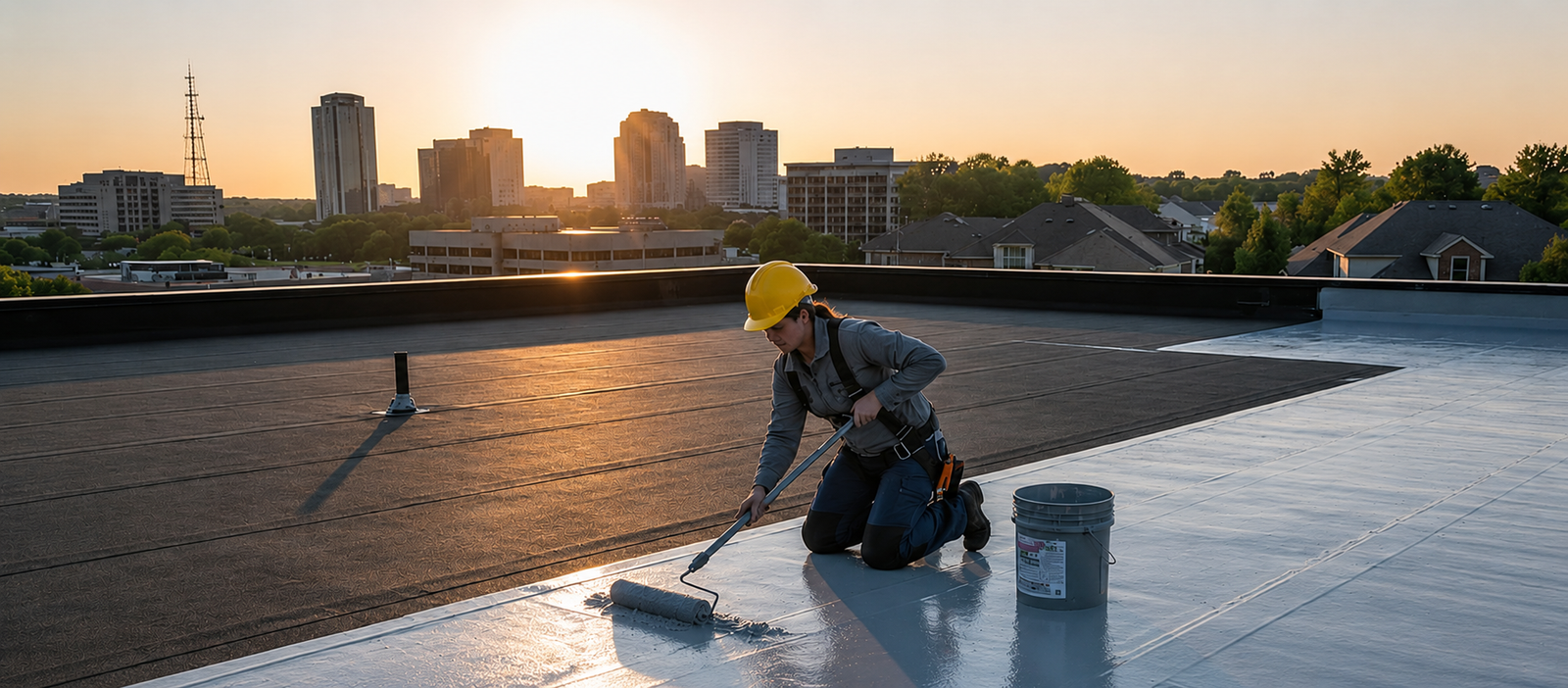
Factories and warehouses across India are rapidly adopting industrial epoxy flooring in 2025. From manufacturing plants and logistics centers to pharmaceutical units, food processing facilities, and automotive workshops, businesses are investing in epoxy flooring systems to reduce maintenance costs and improve workplace safety.
Traditional concrete floors crack, generate dust, absorb chemicals, and deteriorate over time — driving up operational costs and creating safety risks. Epoxy flooring has become one of the most reliable and cost-effective solutions for industrial properties looking to achieve long-term performance.
In addition to reducing maintenance expenses, epoxy flooring also helps industrial facilities improve cleanliness, meet hygiene standards, and create a safer working environment.
What Is Industrial Epoxy Flooring?
Industrial epoxy flooring is a high-performance flooring system created by applying multiple layers of epoxy resin and hardener over prepared concrete surfaces. Once cured, it forms a seamless, non-porous, and extremely durable surface capable of handling harsh industrial environments.
Unlike conventional floor coatings, epoxy chemically bonds with concrete — creating a strong protective layer that resists wear, impact, moisture, chemicals, and abrasion.
Why Flooring Quality Matters for Industrial Facilities
Industrial buildings consume heavy operational resources every day. Poor flooring directly increases costs and risks through:
- Frequent concrete crack repairs
- Dust contamination of machinery and products
- Chemical spill damage
- Slip and fall accidents
- High cleaning and maintenance expenses
Upgrading to epoxy flooring directly reduces these problems and improves overall facility performance.
Key Components of an Epoxy Flooring System
Epoxy Resin
The primary material that bonds with concrete and forms the durable surface layer.
Hardener
Mixed with resin to trigger the chemical curing process and create strength.
Primer Coat
Prepares the concrete surface and ensures maximum adhesion of the epoxy layers.
Topcoat
Final protective layer that provides chemical resistance, gloss finish, and durability.
Anti-Slip Additives
Optional texture material added to improve safety in wet or high-traffic zones.
Key Benefits of Industrial Epoxy Flooring
Exceptional Durability
Withstands forklifts, pallet trucks, and heavy machinery without surface damage.
Chemical Resistance
Resists oils, fuels, solvents, mild acids, lubricants, and cleaning agents.
Heavy Load Capacity
Distributes loads from storage racks and machinery without damaging the substrate.
Dust-Free Surface
Seals concrete completely, eliminating dust that contaminates products and air quality.
Improved Workplace Safety
Anti-slip finishes and high-visibility markings reduce accidents on the floor.
Easy Maintenance
Non-porous and seamless — simple to clean with standard industrial methods.
Professional Appearance
Glossy, uniform finish with color customization and corporate branding options.
Moisture Protection
Acts as a barrier against water, humidity, and liquid spills.
Long-Term ROI
Lower maintenance costs and longer floor life deliver strong financial returns.
Industries That Benefit from Epoxy Flooring
- Manufacturing plants and factories
- Warehouses and logistics centers
- Pharmaceutical industries
- Food processing units
- Automobile workshops and service centers
- Chemical industries
- Electronics manufacturing
- Distribution and fulfillment centers
Types of Industrial Epoxy Flooring
Self-Leveling Epoxy
Smooth, seamless finish ideal for clean-room and light industrial environments.
Anti-Skid Epoxy
Textured surface for high-traffic or wet zones requiring slip resistance.
Heavy Duty Epoxy
Maximum load-bearing and abrasion resistance for demanding industrial floors.
Epoxy Mortar
Thick, aggregate-filled system for the harshest chemical and impact environments.
Conductive (ESD) Epoxy
Electrostatic discharge control for electronics and sensitive manufacturing areas.
Chemical Resistant Epoxy
Specialized formulations designed for aggressive chemical exposure environments.
Common Problems Without Epoxy Flooring
- Cracked and deteriorating concrete surfaces
- Constant dust generation affecting products and machinery
- Chemical spill damage to flooring
- High frequency of floor repairs
- Workplace accidents due to slippery or uneven surfaces
- Difficulty maintaining hygiene standards
Epoxy Flooring System Cost Estimate
| Area Size | Estimated Cost (India) |
|---|---|
| Up to 500 sq ft | ₹30,000 – ₹60,000 |
| 500 – 2,000 sq ft | ₹60,000 – ₹2,00,000 |
| 2,000 – 5,000 sq ft | ₹2,00,000 – ₹5,00,000 |
| 5,000+ sq ft | Custom Quote Required |
While the initial investment may appear significant, long-term savings on maintenance and repairs make epoxy flooring a financially smart decision.
Estimated Maintenance Savings with Epoxy Flooring
| Facility Type | Estimated Annual Savings |
|---|---|
| Small Workshop (up to 1,000 sq ft) | ₹20,000 – ₹50,000 |
| Mid-Size Factory (1,000 – 5,000 sq ft) | ₹50,000 – ₹2,00,000 |
| Large Warehouse (5,000 – 20,000 sq ft) | ₹2,00,000 – ₹8,00,000 |
| Industrial Complex (20,000+ sq ft) | ₹8,00,000+ |
Professional Installation Process
Concrete Inspection
Assessment of the existing surface for cracks, moisture, and structural integrity.
Surface Grinding
Mechanical grinding to open the concrete pores for better epoxy adhesion.
Crack Repairs
Filling and repairing existing cracks before coating application.
Moisture Testing
Ensuring the concrete is dry enough for proper epoxy bonding.
Primer Application
Applying a base coat to improve adhesion between concrete and epoxy.
Epoxy Coating & Curing
Applying epoxy layers followed by proper curing time for maximum strength.
Why Epoxy Flooring Is a Smart Business Investment
- Reduce long-term floor maintenance costs
- Improve workplace safety and compliance
- Increase facility cleanliness and hygiene
- Enhance professional appearance for audits and client visits
- Extend the life of the concrete substrate
As industrial facilities continue expanding, epoxy flooring adoption is expected to accelerate further across India.
Why Choose HWCC India for Epoxy Flooring?
HWCC India provides customized industrial flooring solutions designed for maximum durability and performance.
- Industrial epoxy flooring consultation
- Site inspection and surface assessment
- Customized flooring design
- High-performance epoxy materials
- Professional installation team
- PU flooring and anti-skid systems
- Maintenance and monitoring services
Frequently Asked Questions
How long does industrial epoxy flooring last?
With proper installation and maintenance, industrial epoxy flooring can last 10–20 years depending on usage and traffic conditions.
Is epoxy flooring suitable for warehouses?
Yes. Epoxy flooring is ideal for warehouses because it withstands heavy forklift traffic, storage racks, and continuous material handling.
Can epoxy flooring resist chemicals?
Yes. Industrial epoxy flooring offers excellent resistance to oils, fuels, grease, solvents, and many industrial chemicals.
Is epoxy flooring easy to maintain?
Absolutely. Epoxy floors are seamless, non-porous, stain-resistant, and easy to clean using standard industrial cleaning methods.
What is the cost of epoxy flooring in India?
Costs depend on area size, flooring type, and surface condition. HWCC India provides customized quotes based on site inspection.
Do epoxy floors require maintenance?
Epoxy flooring requires minimal maintenance such as regular cleaning and periodic inspections to maintain performance.
Why should I choose professional epoxy installation?
Professional installation ensures proper surface preparation, correct material application, and long-lasting performance while minimizing the risk of coating failure.
Conclusion
Industrial epoxy flooring is more than just a protective coating — it is a long-term investment in the safety, durability, and efficiency of your facility.
Whether you operate a manufacturing plant, warehouse, pharmaceutical unit, or logistics center, epoxy flooring provides superior performance compared to traditional concrete surfaces.
By choosing a professionally installed epoxy flooring system, businesses can reduce maintenance costs, improve workplace safety, extend floor life, and create a cleaner, more productive environment. Partner with HWCC India for a solution tailored to your industry's unique requirements.